LP3ES, Jakarta · Tahun, cetakan, jumlah halaman, dan ISBN eksemplar belum diperiksa. Rujukan pembanding: Cinere, Depok: LP3ES, 2017, cetakan pertama, xlix + 392 hlm., ilus., 23 cm, ISBN 978-602-7984-27-1 (belum diverifikasi pada halaman hak cipta eksemplar) · Tanpa tahun
Abstract
A biography of Muhammad Saleh Datuk Rangkayo Basa (1841–1921), a Minangkabau merchant from Pariaman, by the Universitas Negeri Padang historian Mestika Zed, with an introduction by M. Dawam Rahardjo. The book traces the subject's journey from shop assistant, fish trader, and ship's captain to owner of a fleet of boats, shops, and a trading company (maskapai) managed in a modern way in the early twentieth century. Drawing mainly on the subject's autobiography, written in Arabic-Malay script and published by his grandson in 1933, the book places Muhammad Saleh's life within the maritime economic history of the west coast of Sumatra, indigenous entrepreneurship in the colonial period, and the relationship between Minangkabau adat, Islam, and commercial ethics.
Identifier
KBA-BKU-TT-0017
Type
Buku
Publisher
LP3ES, Jakarta
Date Issued
Tanpa tahun
Bibliographic Citation
Tahun, cetakan, jumlah halaman, dan ISBN eksemplar belum diperiksa. Rujukan pembanding: Cinere, Depok: LP3ES, 2017, cetakan pertama, xlix + 392 hlm., ilus., 23 cm, ISBN 978-602-7984-27-1 (belum diverifikasi pada halaman hak cipta eksemplar)
Saleh, Muhammad, 1841-1921Businessmen -- Indonesia -- Sumatera Barat -- BiographyMinangkabau (Indonesian people) -- Biography
BISAC Category
BIO003000 BIOGRAPHY & AUTOBIOGRAPHY / Business
Language
Indonesia
Description
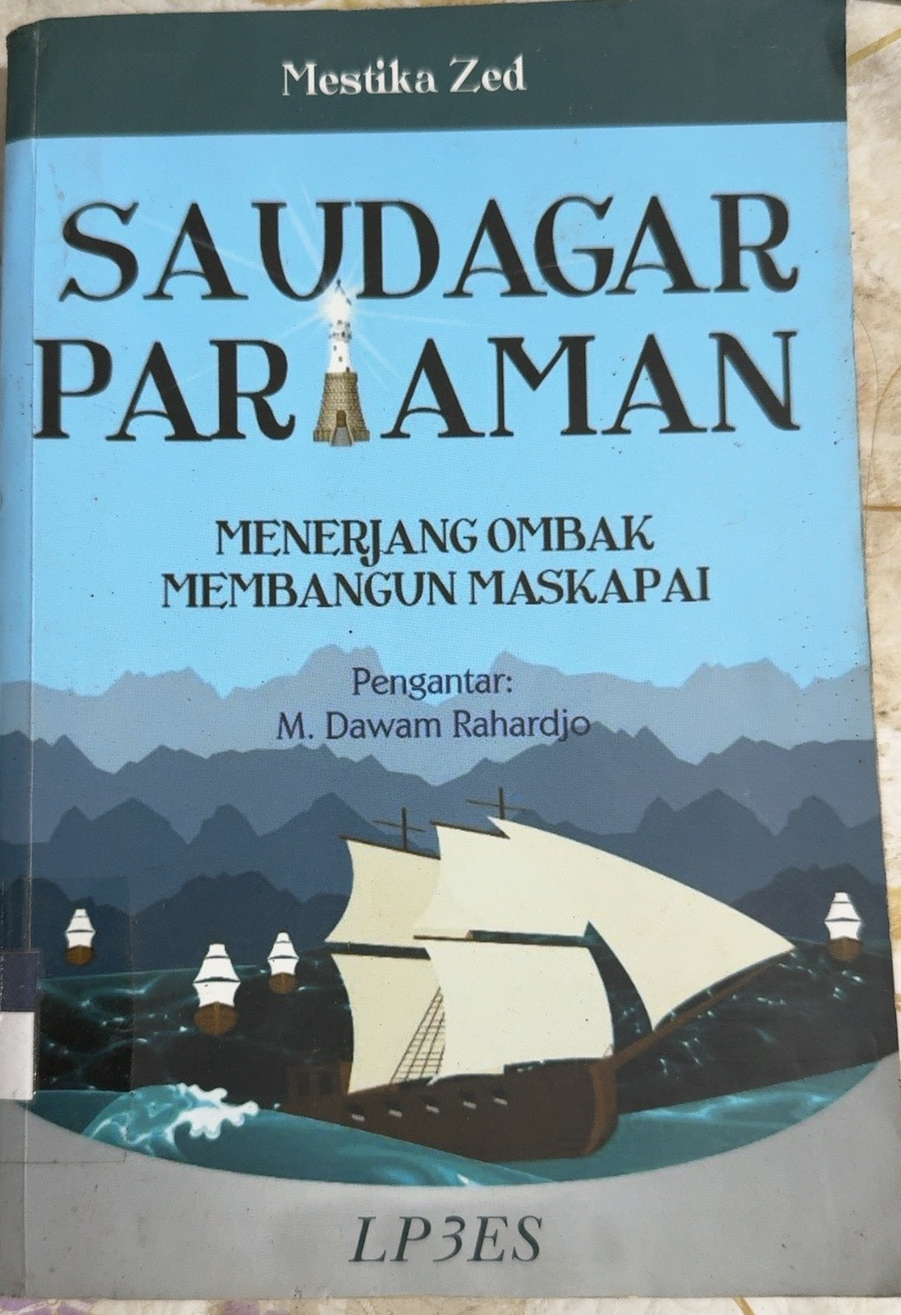
Saudagar Pariaman: Menerjang Ombak Membangun Maskapai (The Merchant of Pariaman: Braving the Waves to Build a Trading Company) by the historian Mestika Zed is a biography of Muhammad Saleh Datuk Rangkayo Basa (1841–1921), a Minangkabau merchant from Pariaman on the west coast of Sumatra, whom the author presents as one of the pioneers of modern indigenous enterprise in the Nusantara. Library catalogues record the subtitle of the book as the life of Muhammad Saleh Datuk Rangkayo Basa, pioneer of modern indigenous enterprise in the Nusantara. The book carries a foreword by the economist and Muslim intellectual M. Dawam Rahardjo and is published by LP3ES. The cover of this copy shows the author's name on a dark green band at the top, a large title in black letters with an image of a lighthouse replacing the letter L in the word PARIAMAN, a subtitle in dark blue letters, the name of the author of the foreword, and an illustration of a large white-sailed ship cutting through the waves in front of a range of blue mountains, with several small ships in the distance. The LP3ES logo is printed at the bottom.
Mestika Zed (1955–2019) was a professor of history at Universitas Negeri Padang and one of the leading historians from West Sumatra. He studied history at IKIP Padang and Universitas Gadjah Mada, and then obtained his master's and doctoral degrees from the Vrije Universiteit Amsterdam. His works include studies of the Emergency Government of the Republic of Indonesia (Pemerintahan Darurat Republik Indonesia), the history of the Indarung cement industry, the revolution in Palembang, the Silungkang communist uprising, the Giyugun, as well as books on historical research methodology and librarianship. Saudagar Pariaman is among his last works published before his death in September 2019, so the book can also be read as part of his intellectual legacy in Minangkabau historiography.
The main subject of the book, Muhammad Saleh, was born in 1841 in Pariaman into a family of traders. He started life from the bottom: working as a shop assistant, trading fish, serving as a boat crewman, and then becoming a ship's captain. His trading network linked the coast and the Minangkabau interior, carrying salt, fish, and marine products to the darek (highland heartland) and bringing vegetables, sugar, tobacco, and gambier to the coast. His boats and ships sailed along the west coast of Sumatra, from the Aceh region in the north to Bandar Sepuluh in the south. He owned shops in Pariaman and Padang Panjang and employed dozens of people on land and at sea. The adat title Datuk Rangkayo Basa, or Datuk Orang Kaya Besar (Great Rich Man), that he bore reflects his social and economic standing in society.
The high point of his enterprise was the founding of a trading company in Pariaman in the early twentieth century, which according to a number of sources was managed in a modern and professional manner. That is why Mestika Zed chose the phrase "membangun maskapai" (building a company) in the title. Muhammad Saleh is also known for trying to break through trade monopolies, for example by reviving local salt and coconut-oil production, and for applying a profit-sharing system for his workers. The commercial ethics he firmly upheld, a blend of Minangkabau adat values and Islamic teachings, is one of the themes that merit study.
The main source for Muhammad Saleh's life story is his own autobiography, written in Minangkabau in Arabic-Malay script in the early twentieth century. The manuscript was later transliterated and published by his grandson, S.M. Latif, in 1933, and is known among other titles as Tjoerito Parasaian Me'saleh or Riwayat Hidup dan Perasaian Saya (The Story of My Life and Experiences). The manuscript has long attracted the attention of researchers because it is one of the oldest indigenous autobiographies from Sumatra, depicting economic life, adat, earthquakes, and relations with the Dutch colonial government from the perspective of the actor himself. Mestika Zed's book treats this source critically, supplements it with archives and literature, and places Muhammad Saleh's life within the context of the economic history of the west coast of Sumatra.
The available publisher data indicate that the first printing of the book was published in Cinere, Depok, in 2017, with xlix and 392 pages and illustrations, measuring 23 centimetres, with ISBN 978-602-7984-27-1. The catalogue of the University of Wisconsin–Madison Libraries records the subjects of the book as, among others, Saleh, Muhammad, 1841–1921; Minangkabau (Indonesian people) in West Sumatra as biographical subjects; and businesspeople in West Sumatra. The printing, year, and ISBN of the photographed copy still need to be checked against the copyright page.
The foreword by M. Dawam Rahardjo lends additional weight. Dawam is widely known as a thinker on people's economics and a scholar of the Muslim entrepreneurial ethos in Indonesia, and was long involved with LP3ES itself. His presence signals that the book is not read merely as the story of a local figure, but also as material for understanding the history of indigenous entrepreneurship, the relationship between religion and the work ethic, and the emergence of a Muslim merchant class in the Dutch East Indies.
For historical and anthropological studies, the book is relevant to several themes. First, the maritime economic history of the west coast of Sumatra, which for centuries connected Minangkabau, Aceh, Nias, Bengkulu, and the trading networks of the Indian Ocean. Second, the debate about indigenous entrepreneurship in the colonial period, which is often portrayed as having lost out in competition with Chinese and European traders. The story of Muhammad Saleh shows that indigenous entrepreneurs were capable of building large and modern enterprises. Third, the relationship between Minangkabau matrilineal adat and the world of coastal trade, since studies of Muhammad Saleh's autobiography show that the society of Pariaman, open to newcomers, had adat practices that differed from those of the darek.
For readers in Aceh, the book is interesting because Muhammad Saleh's trading network reached the west coast of Aceh, and because the history of the west coast of Sumatra in the nineteenth century was strongly shaped by trade relations between Aceh and Minangkabau. The book can be read together with studies of the pepper trade, the ports of the west coast, and the diaspora of Minangkabau traders in Aceh. In the context of a course on Islam in the Malay World and the Indian Ocean, the life of Muhammad Saleh provides a concrete example of how local Muslim merchants played a role in the regional economy.
As a critical note, a biography that relies heavily on its subject's autobiography risks following the way that subject portrayed himself. Readers need to pay attention to the extent to which the author tests the claims in the autobiography against other sources, such as colonial archives and trade records. Discrepancies in the date of death and in the subject's title in various popular sources also show the need to refer directly to this book and its primary source.
The book is also valuable as an example of historical biography that combines the life narrative of a single figure with an analysis of economic and social structure. Such an approach is in line with the tradition of social history that has developed in Indonesia since the 1970s, when historians began to pay attention to local economic actors, not only to political figures and great events of state. Students of history, economic anthropology, and Islamic studies can take this book as a model for research based on autobiography and local archives.
In terms of collection documentation, this copy shows signs of use on the cover and has a library label on the spine on the left side. This note is a curatorial introduction based on the cover and catalogue information, not a summary of the entire content of the book.
Suitable search subjects include Muhammad Saleh Datuk Rangkayo Basa, Pariaman, Minangkabau economic history, indigenous entrepreneurship, maritime trade on the west coast of Sumatra, biographies of businesspeople, and the history of West Sumatra. For citation purposes, references should give the author's name, the full title, the publisher, the year, and the pages read directly in the copy.
Mestika Zed, M. Dawam Rahardjo (pengantar), “Saudagar Pariaman: Menerjang Ombak Membangun Maskapai [The Merchant of Pariaman: Braving the Waves to Build a Trading Company]”, LP3ES, Jakarta, Tahun, cetakan, jumlah halaman, dan ISBN eksemplar belum diperiksa. Rujukan pembanding: Cinere, Depok: LP3ES, 2017, cetakan pertama, xlix + 392 hlm., ilus., 23 cm, ISBN 978-602-7984-27-1 (belum diverifikasi pada halaman hak cipta eksemplar). KBA13 Academy Archive and Library, KBA-BKU-TT-0017.