
Wealth of Nations
2012
Abstract
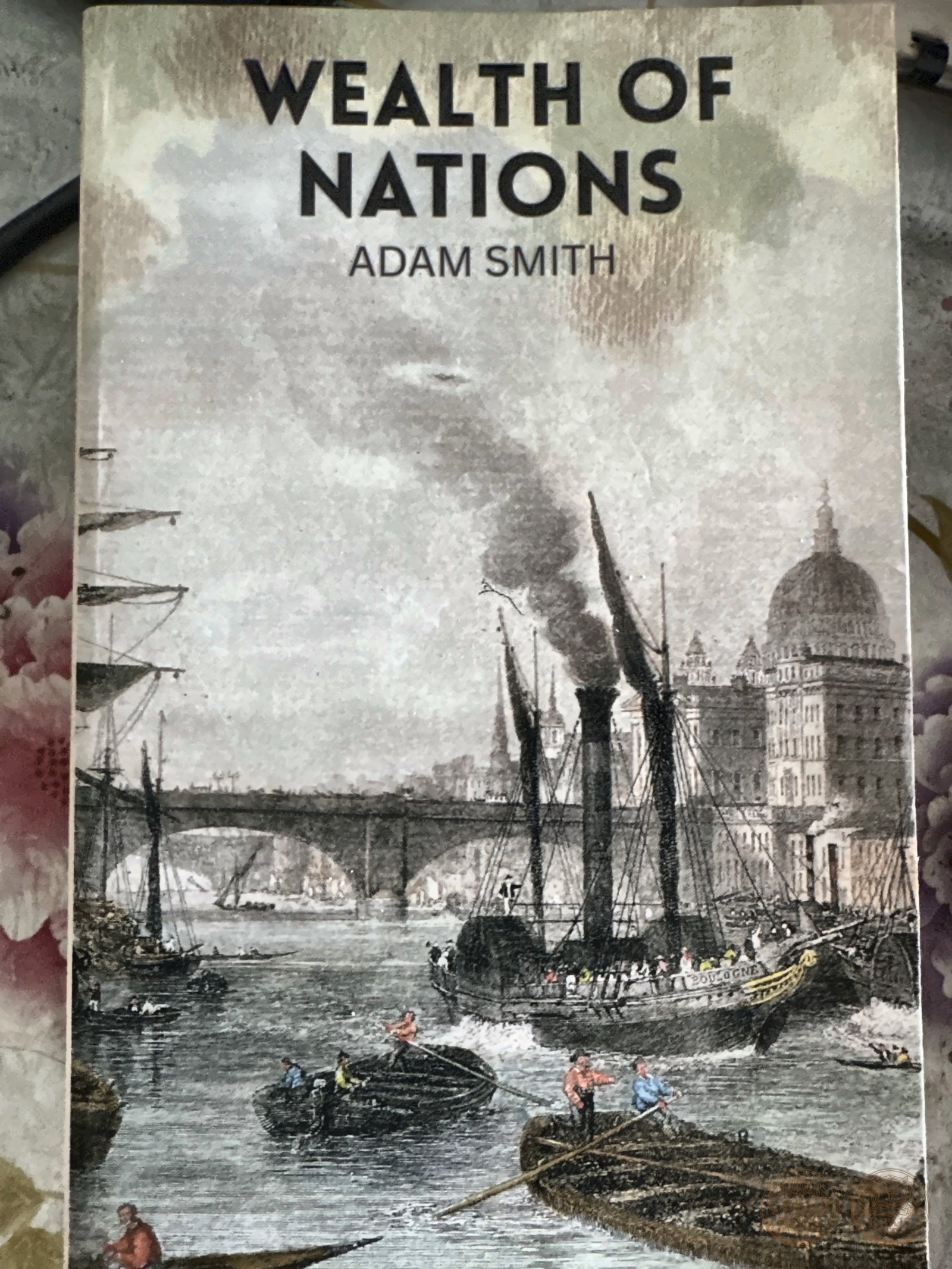
An Inquiry into the Nature and Causes of the Wealth of Nations, first published in 1776, is the work of the Scottish moral philosopher Adam Smith (1723–1790) and is generally regarded as the founding book of modern economics. Smith asks what the wealth of a nation really is and how it grows. His answer rejects the mercantilist view that wealth lies in hoards of gold and silver; true wealth is the productive capacity of society, that is, human labour and its products. The first book opens with the famous analysis of the division of labour through the example of the pin factory, which shows how specialization multiplies productivity, and then discusses money, prices, wages, profit, and land rent. The subsequent parts set out the accumulation of capital, the history of European economic development, a critique of the mercantile and physiocratic systems, and the role of the state in defence, justice, public works, education, and taxation. From this emerges the idea that individuals pursuing their own interests in a competitive market, as if led by an invisible hand, contribute to the general welfare. At the same time, Smith was wary of monopoly, collusion among merchants, and the effects of monotonous work on labourers, so that his work is more nuanced than a mere defence of the free market. The book became the principal reference of classical economics and continues to be read in debates about markets, the state, trade, and social justice. The cover of the collector's edition (2012) features a coloured engraving of the River Thames in London with steamships and merchant boats as well as St Paul's Cathedral, depicting the pulse of commerce that is the central subject of the book.
How to cite
Adam Smith, “Wealth of Nations”, 2012. KBA13 Academy Archive and Library, KBA-BKU-2012-0002.