
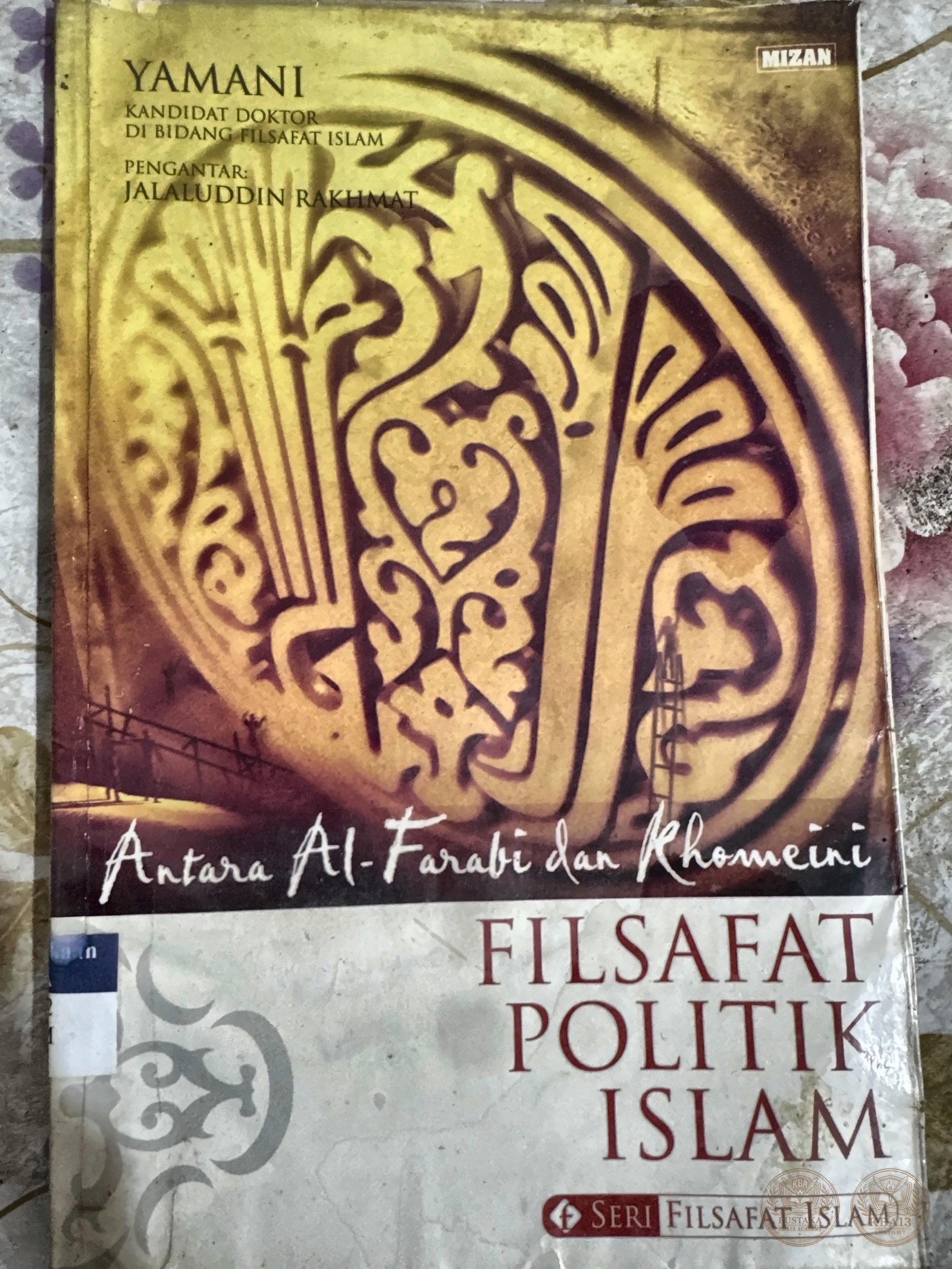
Antara Al-Farabi dan Khomeini: Filsafat Politik Islam [Between Al-Farabi and Khomeini: Islamic Political Philosophy]
Mizan, Bandung · 2002
Abstract
A book by Yamani, at the time a doctoral candidate in Islamic philosophy, with an introduction by Jalaluddin Rakhmat, published by Mizan in its Islamic Philosophy Series (Seri Filsafat Islam) (2002). The book compares two landmarks of Islamic political philosophy separated by more than a thousand years: Abu Nasr al-Farabi (d. 950), the "second teacher" after Aristotle, with his idea of the virtuous state (al-madinah al-fadilah) led by a philosopher-prophet, and Ayatollah Ruhollah Khomeini (1902–1989) with his theory of wilayat al-faqih, the guardianship of the jurist that became the foundation of the Islamic Republic of Iran. Yamani traces the common thread between the two bodies of thought: the concept of the ideal leader who combines intellectual and moral perfection, the purpose of the state as guiding citizens towards happiness, and the relationship between revelation, reason, and power. The book has become an important reference for the study of Islamic political philosophy, Shi'i political thought, and debates about the state in Islam in Indonesia.
How to cite
Yamani, Jalaluddin Rakhmat (pengantar), “Antara Al-Farabi dan Khomeini: Filsafat Politik Islam [Between Al-Farabi and Khomeini: Islamic Political Philosophy]”, Mizan, Bandung, 2002. KBA13 Academy Archive and Library, KBA-BKU-2002-0004.