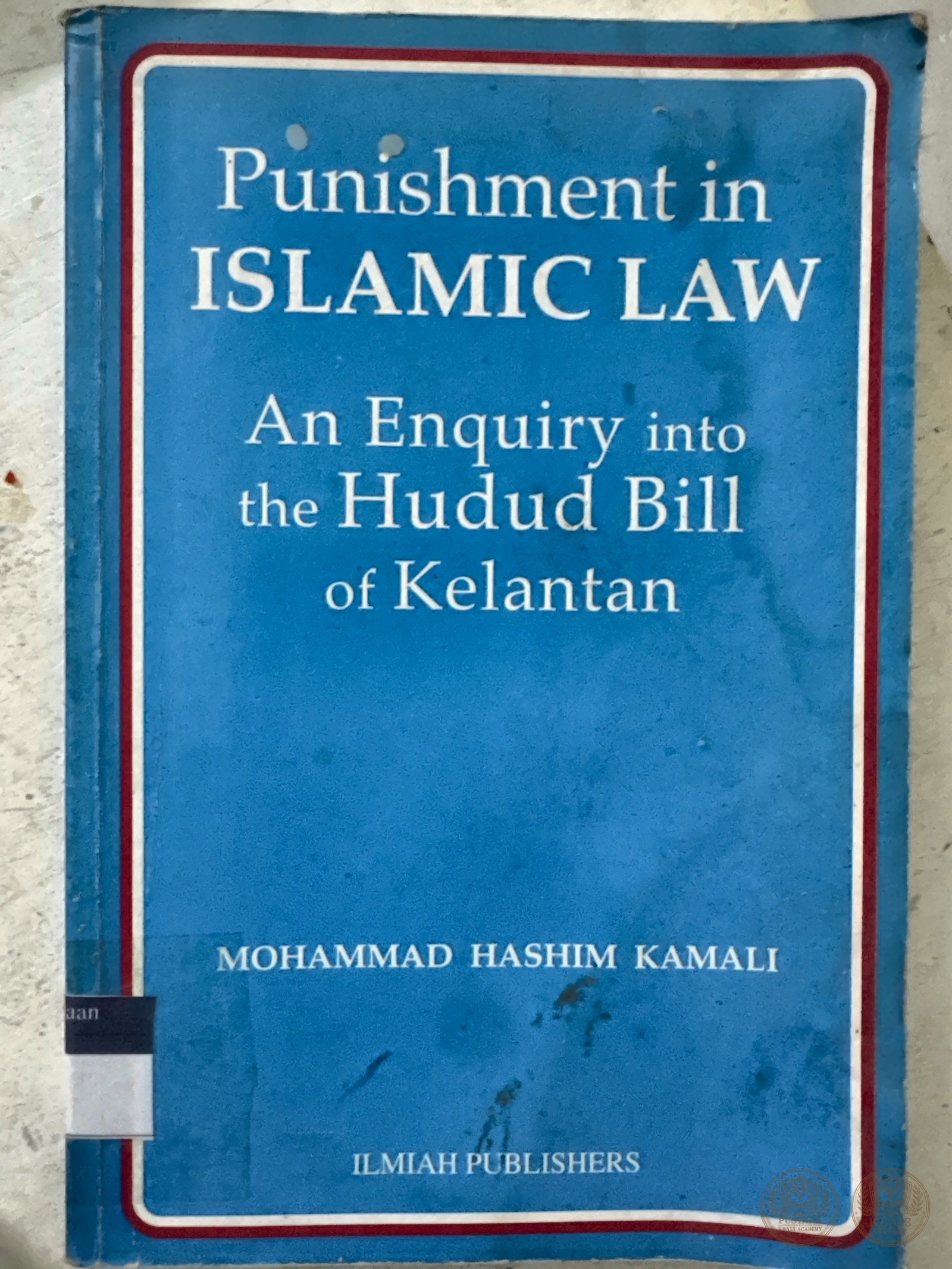
Punishment in Islamic Law: An Enquiry into the Hudud Bill of Kelantan
Ilmiah Publishers, Kuala Lumpur · 1995
Abstract
A critical study by Prof. Mohammad Hashim Kamali, an Afghan-born expert in Islamic law who taught for many years at the International Islamic University Malaysia, of the Kelantan Hudud Bill, namely the Syariah Criminal Code (II) Enactment 1993 passed by the Kelantan State Legislative Assembly under the PAS government. Kamali examines the foundations of punishment in Islam (hudud, qisas, and ta'zir), the requirements of proof, the role of repentance and doubt (syubhat) in averting punishment, and the objectives of the sharia (maqasid). He then weighs the provisions of the enactment, including those on zina, qazaf, drinking khamar (alcohol), theft, hirabah, and riddah (apostasy), together with the provisions on the testimony of women and non-Muslims, and shows a number of inconsistencies both with classical fiqh and with the federal framework of the Malaysian Constitution. The book has become an important reference in the debate over the application of Islamic criminal law in Malaysia and Southeast Asia, including for comparative studies with the Qanun Jinayat of Aceh.
How to cite
Mohammad Hashim Kamali, “Punishment in Islamic Law: An Enquiry into the Hudud Bill of Kelantan”, Ilmiah Publishers, Kuala Lumpur, 1995. KBA13 Academy Archive and Library, KBA-BKU-1995-0001.